
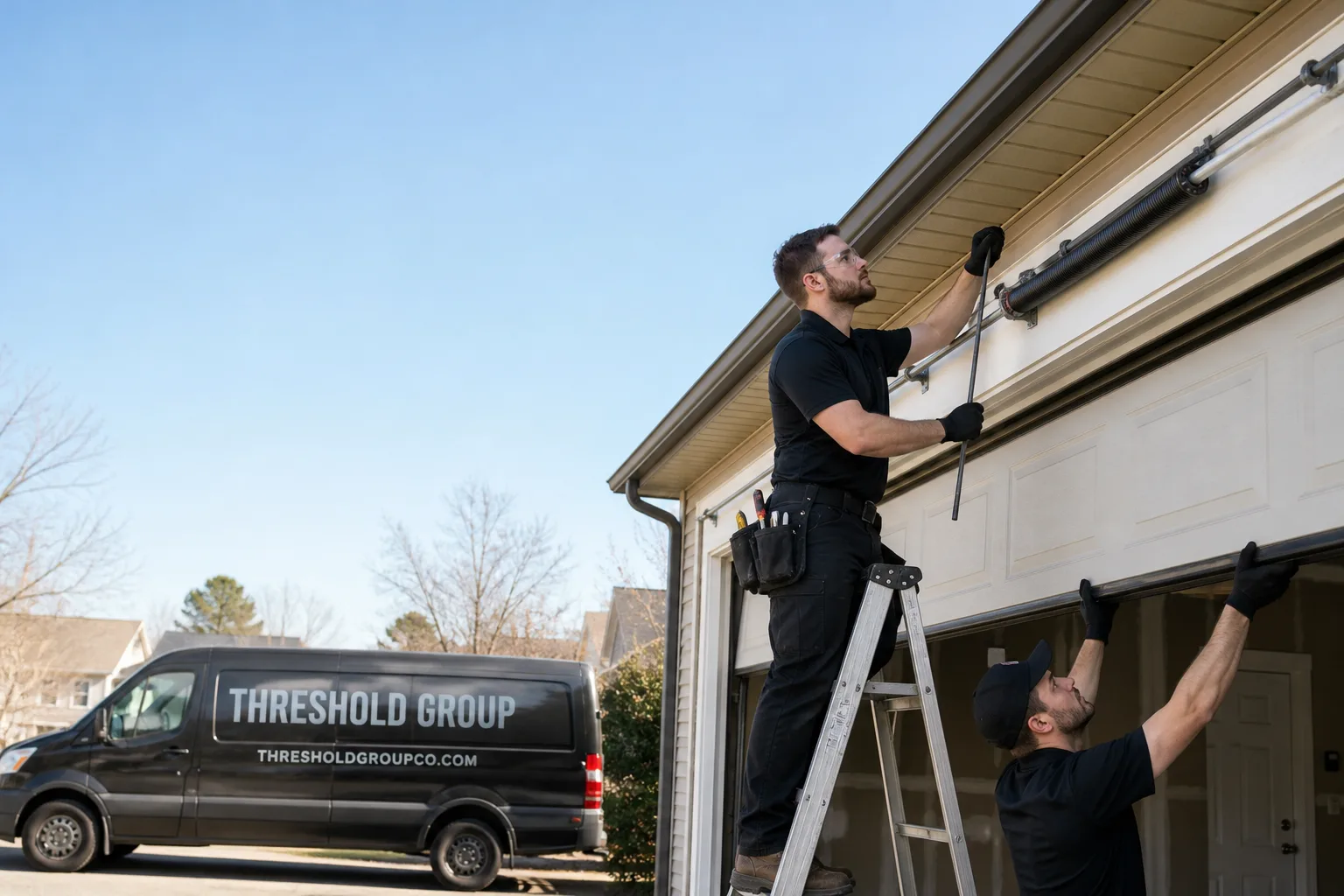
Trusted Damage Restoration for Charlotte Homeowners
When water, fire, or mold damages your Charlotte home, every hour matters. The longer moisture sits in drywall, flooring, and framing, the more structural damage it does, and the higher the repair bill climbs. Threshold Group connects Charlotte homeowners with a damage restoration brand that holds to one standard: you always know exactly who is at your door before you open it. Every technician is background-checked, identity-verified, photo-badged, and introduced by name and photo before the visit. That matters when you’re dealing with a flooded basement off Wilkinson Boulevard or smoke damage in a Myers Park kitchen and need someone you can trust immediately. Call (743) 356-3546, and a live person answers, 24/7.
What Our Damage Restoration Service Includes
Damage restoration is rarely one problem. Water leads to mold. Fire leaves behind smoke and soot. A storm tears off part of a roof and the rain that follows soaks everything beneath it. Our damage restoration brand in the Threshold family handles each layer of the problem, from the first emergency call to the final coat of paint.
Water Damage Restoration
Water damage in Charlotte usually comes from one of three places: a burst pipe, an appliance failure, or storm flooding. Each one behaves differently. A burst supply line can dump hundreds of gallons into a home in under an hour, saturating drywall, warping hardwood, and seeping into subflooring. A slow appliance leak, like a dishwasher or water heater drip, often does its worst work inside walls and under cabinets before you ever see a stain. The restoration process starts with extracting standing water, then moves to industrial dehumidifiers and air movers that pull moisture from materials you can’t see. In Charlotte’s humid climate, getting interior materials genuinely dry is not a luxury. It’s the difference between a repair that lasts and a mold problem that returns in six months. The 365-Day Done Right Promise covers this work: if it’s not done right, we make it right.
Fire and Smoke Damage Restoration
Fire damage is layered. There’s the obvious char and burn, then there’s the smoke that traveled through the house far beyond the flames, and then there’s the soot that settles into every porous surface. Soot is acidic. Left on painted walls, it etches and stains within days. Left in HVAC ducts, it recirculates through the home for months. Charlotte homes built with brick veneer in neighborhoods like Dilworth and Plaza Midwood often contain fires better than newer construction, but the smoke damage throughout the rest of the house is frequently worse because the home holds it in. Restoration means assessing structural damage, removing charred materials, cleaning soot from every surface, and treating the home with odor-neutralizing methods that actually break down the smoke particles rather than just masking them.
Mold Remediation
Mold in a Charlotte home is a humidity and moisture problem as much as it is a biological one. Between May and September, our summer humidity routinely exceeds 70 percent, and any damp spot that is not dried within 24 to 48 hours can start growing mold. The species matters for both safety and remediation approach. Some molds are cosmetic and surface-level. Others, like black mold, require containment, negative air pressure, and full removal of affected porous materials. A proper remediation always starts with finding the moisture source. You can scrub mold off a bathroom ceiling every month, but until the ventilation problem or the hidden leak is fixed, you are just managing a symptom. Our process addresses both, and because mold work is often intertwined with other trades, like insulation replacement or drywall repair, the Threshold family model matters. Your restoration brand can bring in the right trade under the same standard, without sending you searching for another contractor you have to vet from scratch.
Storm and Flood Damage Restoration
Charlotte’s position in the Piedmont means we see heavy rain from summer thunderstorms, and the occasional tropical system that pushes inland from the coast. Creeks like Little Sugar Creek and Briar Creek can overflow quickly in neighborhoods along their floodplains, sending stormwater into basements and crawlspaces. Floodwater is never clean water. It carries sediment, bacteria, and whatever it picked up along the way, which means restoration starts with safe removal and disposal, followed by thorough sanitation before any rebuilding begins. Structural drying after a flood takes time, typically three to five days in Charlotte’s humid summer conditions. Rushing it means trapping moisture behind new drywall, which creates a mold problem inside your walls. The brands in our family know this trade, and the promise behind it, from one trade to the next.
Structural Drying and Dehumidification
This is the unglamorous work that determines whether a restoration job succeeds or fails. Hidden moisture in wall cavities, under flooring, and inside insulation does not announce itself. It stays there, feeding mold growth and slowly rotting framing. Our restoration technicians use moisture meters, thermal imaging, and industrial dehumidification equipment to find and remove water you cannot see. In a Charlotte summer, this stage often takes longer than homeowners expect, because the outdoor air is itself damp and works against the drying process. Monitoring throughout the drying period matters, with moisture readings taken daily and documented. If readings stop improving, the team adjusts approach rather than just waiting. This is the kind of rigor you want when your home’s framing and drywall are on the line.
Content Cleaning and Pack-Out Services
A fire in one room can leave soot on furniture on the other side of the house. A flood can soak rugs, upholstery, and personal items far beyond the standing water line. Professional content cleaning means assessing what can be restored, what cannot, and giving you an honest answer either way. Many Charlotte homeowners are surprised by what survives. Hard goods like dishes, glassware, and metal items clean up well. Textiles like clothing, bedding, and drapes require careful treatment and sometimes specialized cleaning. For larger jobs, pack-out service involves documenting, packing, transporting, and storing your belongings in a climate-controlled facility while your home is restored. Everything is inventoried, labeled, and photographed before it moves, so you know what left, what came back, and what condition it was in at every step. That level of documentation is not just good practice. It is essential if you will be filing an insurance claim.
What happens when you call
- 1
A real person answersNo phone trees - you reach a local pro.
- 2
You get an upfront price rangeHonest numbers before anyone is dispatched.
- 3
A background-checked tech heads outLicensed & insured, dispatched right away.
- 4
You approve before work beginsNothing starts until you say go.
Brands We Service for Damage Restoration
Damage restoration is rarely about the brand of the appliance or fixture that failed. It’s about the systems in your home: the plumbing, the electrical, the HVAC, the structural framing. But when specific equipment is involved, knowing the brand matters. We work with water heaters from Rheem, Bradford White, and A.O. Smith commonly found in Charlotte homes. Each has different failure modes: a Bradford White unit in a Ballantyne home may leak from the tank after seven or eight years of service, while a Rheem in a NoDa bungalow might fail at a fitting connection. Our technicians know where to look first for each brand, which speeds up the initial assessment and keeps the restoration timeline moving.
The same applies to sump pumps, with Zoeller and Wayne being the most common units in Charlotte basements and crawlspaces. A Zoeller pump typically fails from switch fatigue after years of cycling, while a Wayne unit in a crawlspace often fails from debris clogging the impeller. Knowing the difference shapes the response, whether that means clearing the pump or determining the surrounding drainage needs to be part of the restoration plan. Whether your home has a Rheem or Bradford White water heater, a Zoeller or Wayne sump pump, or any other brand, our damage restoration team can help.
Signs You Need Damage Restoration Right Now
Damage does not always announce itself with a burst pipe and water spraying across the room. More often, it builds quietly, and by the time you notice it, the real work has already begun. Here are the warning signs our Charlotte restoration teams see most often, and what they mean when we find them.
- Water stains on ceilings or walls. A brown or yellow discoloration on drywall usually means water has been pooling above or behind that surface. The source might be a roof leak, a supply line, or a slow drain leak inside a wall cavity. By the time the stain is visible, the affected drywall has likely been wet for days, and the area behind it needs to be opened and dried, not just repainted.
- A musty or earthy smell that lingers. That smell is usually microbial growth, and it means mold has already established itself somewhere you cannot see. In Charlotte’s humid months, this can happen inside wall cavities, under carpet, or in HVAC ducts where condensation builds. The right response is to find the moisture source, assess the extent of the growth, and remove it properly, not to mask the smell with air fresheners.
- Peeling or bubbling paint. Paint bubbles when moisture pushes through the drywall from behind. This is a sign that water is trapped inside the wall, not just sitting on the surface. If you see this on a ceiling, check the room above and the roof above that. If it is on an interior wall, the source is likely a pipe or a drain line inside the cavity.
- Warped or buckling flooring. Hardwood floors cup and arch when they absorb moisture, and laminate swells at the seams. In a Charlotte crawlspace home, this often points to a moisture problem below the floor rather than a spill on top of it. Crawlspace humidity, groundwater seepage, or a leak from a drain line under the house are all possibilities, and each requires a different fix before the flooring itself can be addressed.
- Visible mold growth anywhere in the home. Mold on a shower tile can be a routine cleaning issue, but mold on drywall, baseboards, or ceiling materials is never routine. It means the material itself is wet and has been wet long enough to support growth. These porous materials cannot be thoroughly cleaned in place; they need to be removed and replaced after the moisture source is corrected.
Our Damage Restoration Process – Step by Step
Restoration is a sequenced process. Skipping steps or doing them out of order creates more problems down the line. Here is what you can expect when you call (743) 356-3546 for damage restoration in Charlotte, from the first call to the final walkthrough.
Step 1: Emergency Response and Initial Assessment
When you call, a live person answers, 24/7, across every brand in the family. We take your information, gather the basic facts about what happened, and dispatch the response team to your Charlotte home. The first priority is stopping the active damage: shutting off water, securing openings, and preventing further loss. Then the technician walks the property with you, explains what he or she is seeing in plain language, and gives you a clear picture of what comes next. No work begins until the scope and price are in writing and agreed.
Step 2: Water Extraction and Containment
If standing water is present, extraction starts immediately. Truck-mounted extraction units pull hundreds of gallons per hour, far faster than any shop vac from a home improvement store. But extraction only removes what you can see. Containment protocols, including sealing off affected areas with plastic sheeting and establishing negative air pressure when mold or contaminated water is present, prevent the damage from spreading to clean areas of the home. This is where experience with Charlotte’s housing stock matters, because older homes in neighborhoods like Elizabeth and Cherry often have lath-and-plaster walls or balloon framing that behaves differently than modern drywall over dimensional lumber.
Step 3: Drying and Dehumidification
After standing water is gone, the drying phase begins. High-velocity air movers are positioned to create airflow across wet surfaces, and commercial dehumidifiers pull moisture from the air. Technicians set up daily monitoring with moisture meters, taking readings at set points throughout the affected areas and adjusting equipment as needed. In Charlotte’s summer, this phase typically runs three to five days, sometimes longer for deep saturation. The goal is not just a dry surface; it is verified dryness throughout the material, because hidden moisture is what turns a repaired wall into a mold problem a few months later.
Step 4: Cleaning, Sanitizing, and Debris Removal
Once materials are dry, the cleanup begins. Water-damaged drywall, insulation, and carpet pad are cut out and removed. Surfaces that remain are cleaned and sanitized. After fire damage, this stage includes detailed soot removal from every room the smoke reached, not just the room where the fire started. After flood damage, it means sanitizing all touched surfaces with antimicrobial treatments. Debris is hauled away, and the interior is left clean and ready for the next phase. Everything is documented as it goes, which matters if an insurance claim is involved.
Step 5: Repairs, Restoration, and Final Walkthrough
The final phase is putting the home back together. New drywall goes up, is taped and finished. Flooring is replaced. Paint is applied. Trim is installed. This is where the Threshold family model makes a real difference for Charlotte homeowners. If the restoration work revealed an underlying problem, say a failing roof or a compromised foundation, the family can bring in the right trade under the same Threshold standard. You do not start over vetting a new contractor in the middle of a crisis. When the work is complete, we do a final walkthrough with you, verify you are satisfied, and remind you that the 365-Day Done Right Promise stands behind every part of the job. If it is not done right, we make it right.
How Much Does Damage Restoration Cost in Charlotte?
The variables include how much material has to be removed and replaced, how long drying takes, whether content cleaning is involved, and what permits or structural repairs are required. The key to not overpaying is getting a scope that is specific about what will be done, in what order, and at what cost. A free estimate from our restoration brand includes a written breakdown of the work, so you see exactly where your money goes. The price is quoted and agreed before any work begins, and nothing is added later without your approval. Call (743) 356-3546 and a live person will help you schedule an assessment.
Damage Restoration Near Charlotte – Our Service Area
Our damage restoration brand serves homeowners throughout Charlotte and the surrounding communities, including Ballantyne, Myers Park, South End, Plaza Midwood, NoDa, Dilworth, University City, and Steele Creek. Response times vary by location and time of day, but calls are answered immediately, 24/7, and emergency response is dispatched right away. Whether you are in a historic bungalow near Uptown or a newer subdivision near Lake Wylie, you are covered by the same Threshold Verified standard. For more detail on what we do across all twelve trades in the family, visit our home page to learn how one standard travels from Damage Restoration in Charlotte to every other trade we hold to the same promise.
Serving Charlotte, NC - Our Local Coverage Area
We’re based in the Charlotte area and offer Damage Restoration - Charlotte, and know this community well. Use the map below to see our service coverage - if you’re nearby, we can almost certainly help.
Frequently Asked Questions – Damage Restoration in Charlotte
What is damage restoration?
Damage restoration is the process of returning a home to its pre-loss condition after water, fire, mold, or storm damage. It includes extracting water, drying the structure, cleaning affected surfaces, removing unsalvageable materials, and rebuilding what was removed. Our restoration brand handles the entire sequence under the Threshold Standard, with the 365-Day Done Right Promise backing the work.
How long does damage restoration take in Charlotte?
Most water damage jobs in Charlotte are finished in five to ten days from initial response to final walkthrough. The drying phase alone typically runs three to five days, and in the summer, Charlotte’s humidity can extend that. Fire and mold jobs take longer, often two to four weeks, because of the additional cleaning, removal, and reconstruction involved.
How much does damage restoration cost in Charlotte?
Costs range from under $1,000 for a small, contained water leak to $10,000 or more for extensive fire or mold damage across multiple rooms. The only way to know the true cost is to have the affected area assessed. Call (743) 356-3546 for a free estimate; the price is in writing before any work begins.
Do you service Rheem and Bradford White water heaters?
We regularly work on homes with Rheem, Bradford White, and A.O. Smith water heaters in Charlotte, handling water damage restoration when these units leak or fail. Our technicians know the common failure points for each brand, which helps them find the source quickly and build a restoration plan around it.
Are you available for emergencies 24/7?
Yes. A live person answers every call, 24/7, across every brand in the family. Water damage does not wait for business hours, and neither do we. When you call (743) 356-3546 at 2 a.m. with water coming through your ceiling, a human being answers and starts the response.
What warranty comes with damage restoration work?
Every damage restoration job is covered by the 365-Day Done Right Promise. If the work is not done right, we make it right, no runaround. If anyone arrives at your door who was not introduced to you by name and photo beforehand, that visit is on us and we make it right. That is the Threshold Verified guarantee, and it applies to every trade in the family.
How should I prepare my Charlotte home before a restoration visit?
Safety comes first: shut off the water source if you can do so safely, turn off electricity to affected areas if water is near outlets or appliances, and keep children and pets away from the damage. You do not need to move furniture or tear anything out. Leave that to the professionals, and have a list of questions ready. The technician will walk the property with you and explain everything before any work begins.
Schedule Your Damage Restoration Service in Charlotte Today
Water, fire, and mold do not wait, and neither should you. Call (743) 356-3546 now and a live person answers, 24/7. You will get a straight answer about what to do next, a free estimate with the price in writing before any work begins, and technicians who are background-checked, photo-badged, and introduced to you by name and photo before they ever step through your door. If it is not done right, we make it right, for 365 days. That is the Threshold Standard, and it applies to every trade in the family.
Written by Preston Kimball, Owner at Threshold Group, serving Charlotte since 2010.